The healthcare industry has been witnessing a transformation like no other with the integration of artificial intelligence (AI) in its practices. From streamlining administrative processes to enhancing patient care, AI stands at the forefront of innovation.
One of the most groundbreaking applications of AI in healthcare is in the realm of patient diagnosis. Traditional diagnostic methods, despite being thorough, often involve significant time and resources. With AI, we are now looking at a future where diagnosis can be faster and more accurate.
Recent advancements in machine learning algorithms have allowed AI to analyze complex datasets with ease. These datasets include medical imaging results like X-rays and MRIs, patient histories, and special tests. AI systems, equipped with deep learning capabilities, can identify patterns and anomalies that might be invisible to the human eye.
A real-life success story lies in the work done by IBM's Watson. This AI system has been successfully used to diagnose and suggest treatment plans for oncology patients, often uncovering insights that even seasoned oncologists might miss. This is just the tip of the iceberg.
Furthermore, AI applications extend beyond hospitals and into wearable technology. Devices powered by AI can monitor vital health signs constantly, recording data that, when aggregated, provide insights into a patient's health trajectory. For instance, cardiac-related wearables can offer early warnings for potential heart conditions, allowing for timely intervention.
However, with great power comes great responsibility. The integration of AI in healthcare raises questions about data privacy and the ethical implications of AI-driven decisions. Stakeholders must work collaboratively to formulate guidelines ensuring that AI systems are transparent and work within ethical boundaries.
As AI continues to mature, the future looks promising for healthcare professionals and patients alike. The synergy between human expertise and machine learning models promises not only improved diagnostics but also personalized treatment plans tailored to each individual's needs. The revolution in healthcare driven by AI applications is not just a trend, but a powerful movement reshaping our approach to medicine.
Revolutionizing Healthcare: AI Applications in Patient Diagnosis Featured
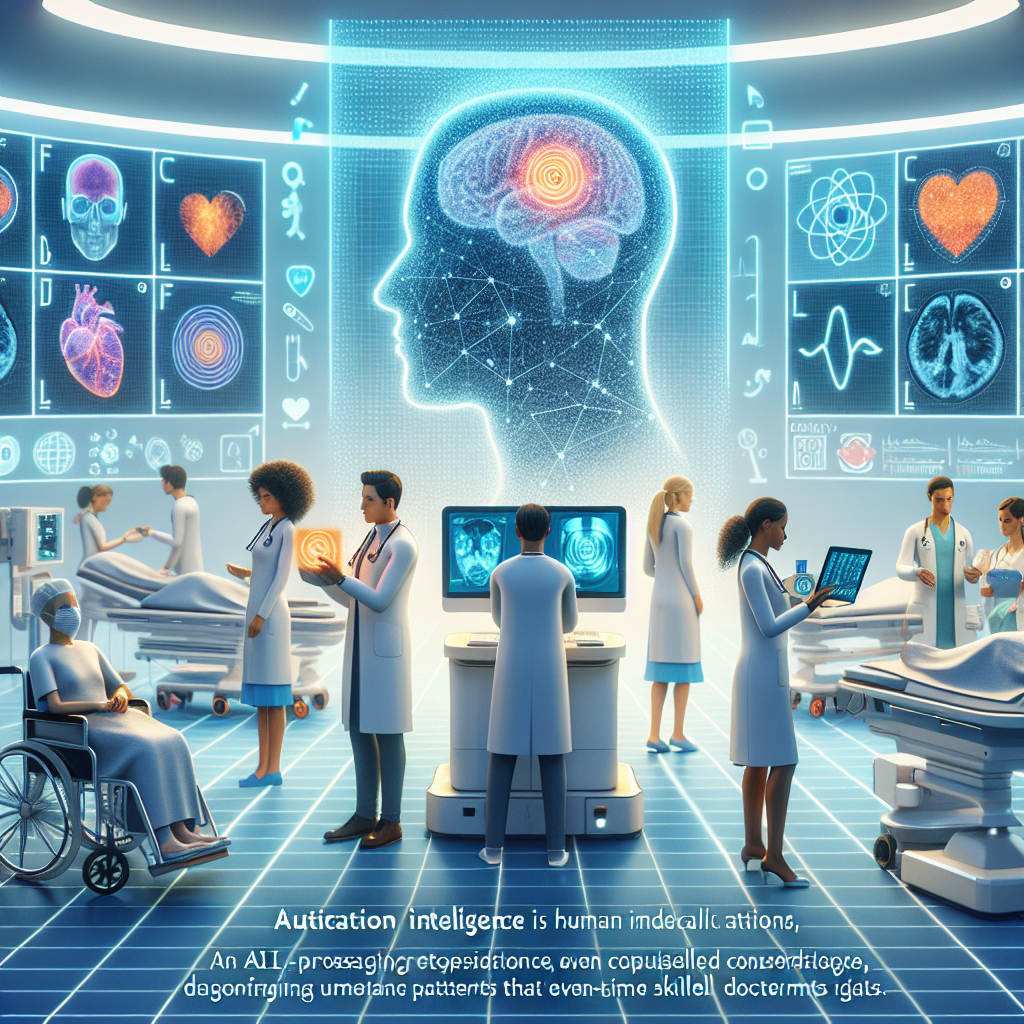 Explore how AI applications are transforming healthcare, enhancing patient diagnosis, and paving the way for more accurate and efficient treatment methods.

Latest from AIML Tech Brief
- The Rise of Machine Learning in Financial Forecasting
- Innovative AI Applications Revolutionizing Healthcare Delivery
- Leveraging AI Tools in Accounting: A Game-Changer for Financial Firms
- Emerging Tools in AI: Transforming Industries into the Future
- The Latest AI Tools Revolutionizing Business Operations