







Artificial Intelligence (AI) has undeniably become a cornerstone of modern business practices, and its applications are profoundly reshaping inventory management across various industries.
One of the most significant trends today is the integration of AI-powered systems in inventory management. These systems enable businesses to predict demand more accurately, optimize stock levels, and minimize waste. AI algorithms analyze historical sales data, monitor real-time inventory levels, and incorporate external factors like market trends and upcoming events to forecast demand.
A notable example can be observed in the retail sector, where companies like Walmart have successfully employed AI to streamline their inventory processes. By analyzing a myriad of data points—including customer preferences, weather forecasts, and even local events—Walmart has reduced stockouts and excess inventory, resulting in substantial cost savings.
Moreover, AI is enhancing warehouse automation. Intelligent robots and drones equipped with AI technology are now being used to carry out routine tasks such as sorting and retrieving products. This not only reduces labor costs but also significantly minimizes human error and enhances operational efficiency.
Another critical aspect of AI in inventory management is its ability to deliver real-time insights and analytics. Businesses can gain a comprehensive view of their entire supply chain, making data-driven decisions that lead to improved service levels and customer satisfaction. Having a holistic picture allows companies to adapt quickly to any discrepancies between supply and demand, ensuring a smooth operation.
Looking forward, the use of AI applications in inventory management will continue to evolve, with advancements such as autonomous vehicles, IoT integration, and sophisticated machine learning algorithms paving the way for more sophisticated and seamless operations.
As organizations continue to embrace AI technologies, it's imperative for decision-makers to consider both the opportunities and challenges presented by this transformation. From ethical considerations and potential bias in AI systems to data security and privacy concerns, a balanced approach is essential for leveraging AI successfully in inventory management.
Estimated reading time: 1 minute, 40 seconds
AI Applications Transforming Inventory Management Featured
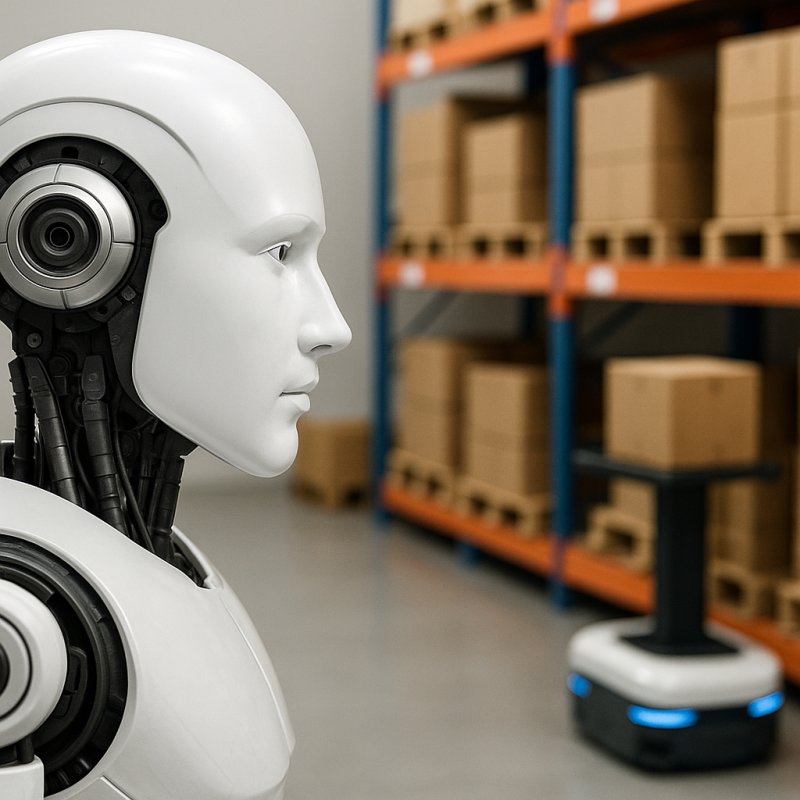 AI applications are transforming inventory management with enhanced demand forecasting, automation, and real-time insights, reshaping supply chains.
Latest from AIML Tech Brief
- AI Applications Revolutionize Retail through Real-Time Personalization
- Machine Learning's Role in Enhancing Financial Fraud Detection
- Highlights from the Latest AI News
- The Rise of AI in Natural Language Processing: New Developments This Week
- Navigating the Dynamics of AI in Customer Service Management: Trends Shaping 2023
Most Read
-

-
Oct 30 2018
-
Written by Craig Gehrig
Many large companies have already adopted some form of automation…
-
-
-
Dec 16 2019
-
Written by News
Artificial intelligence will be used to complete an unfinished symphony,…
-
-
-
Mar 17 2020
-
Written by Deborah Huyett
“What do you think you’re doing, Dave?” This iconic line…
-
-
-
Jan 08 2019
-
Written by Robert Agar
Industrial robots are not a new phenomena. They have been…
-
