







Machine learning (ML) has steadily evolved from a futuristic buzzword to a pivotal tool in the financial services industry, particularly in accounting. Recent developments highlight that ML is not just an ancillary feature but a core driver of innovation in accounting processes.
One of the most significant trends in the sector is the adoption of ML algorithms to automate routine accounting tasks. These include data entry, reconciliation, and financial reporting. For instance, ML models can quickly learn and adapt to categorize transaction data, freeing up accountants to focus more on strategic decision-making. This transformation increases efficiency and reduces human errors, fundamentally altering how firms manage finances.
Recent updates emphasize using ML in detecting anomalies and fraud in financial records. Algorithms can now analyze vast datasets to identify patterns that deviate from the norm, flagging potential areas of concern. A prominent example comes from my tenure at Deloitte, where implementing an ML-driven fraud detection system cut investigative times by over half, saving millions in potential losses.
Furthermore, predictive analytics is rapidly becoming a cornerstone in budgeting and forecasting. By leveraging historical data, ML models predict future financial trends with remarkable accuracy. This capability allows firms to make more informed decisions regarding investments, resource allocation, and risk management.
Another noteworthy application of ML in accounting is natural language processing (NLP). NLP tools can comprehend and process human language, enabling more efficient handling of unstructured data such as emails and invoices. This technology streamlines communication between different departments, reducing administrative overhead.
The industry's integration of ML also extends to personalized client interactions. Accounting firms now utilize ML to tailor services, creating a customized experience for clients based on their specific financial behaviors and needs. Such personalization has been shown to increase client satisfaction and retention—a critical success factor in a competitive market.
Investment in ML technologies has proven beneficial, paving the way for innovative accounting solutions. While challenges such as data privacy and ethical concerns remain, the adaptive capabilities of ML continue to position it as a transformative force in accounting. Firms that embrace these advancements will most likely lead the charge toward a more efficient and insightful financial future.
Estimated reading time: 1 minute, 52 seconds
Machine Learning Pioneers: Transforming the Accounting Landscape Featured
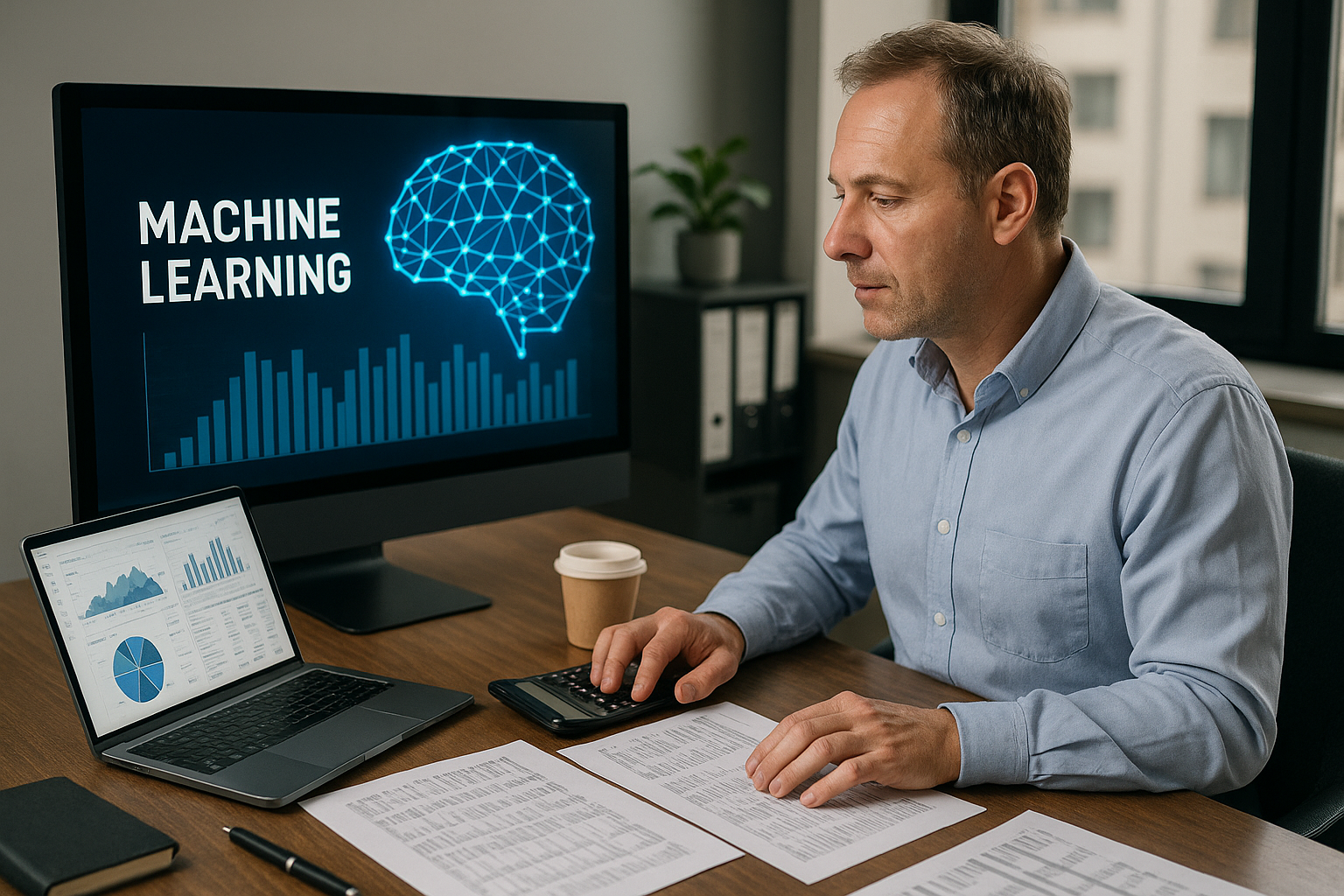 Discover how machine learning is revolutionizing accounting by automating tasks, detecting fraud, and enhancing predictive analytics.
Latest from AIML Tech Brief
- AI Applications Revolutionize Retail through Real-Time Personalization
- Machine Learning's Role in Enhancing Financial Fraud Detection
- Highlights from the Latest AI News
- The Rise of AI in Natural Language Processing: New Developments This Week
- Navigating the Dynamics of AI in Customer Service Management: Trends Shaping 2023
Most Read
-

-
Oct 30 2018
-
Written by Craig Gehrig
Many large companies have already adopted some form of automation…
-
-
-
Dec 16 2019
-
Written by News
Artificial intelligence will be used to complete an unfinished symphony,…
-
-
-
Mar 17 2020
-
Written by Deborah Huyett
“What do you think you’re doing, Dave?” This iconic line…
-
-
-
Jan 08 2019
-
Written by Robert Agar
Industrial robots are not a new phenomena. They have been…
-
